
GUIDE TO CARING FOR COMPRESSION SOCKS
What Are Compression Socks?
Compression socks are specialized hosiery designed to promote better blood circulation, reduce swelling, and alleviate discomfort in the legs. They apply graduated pressure, meaning the compression is strongest at the ankle and gradually decreases as it moves up the leg. This design helps push blood back toward the heart, preventing pooling and improving overall circulation. Compression socks and stockings are particularly beneficial for people who:

spend long hours on their feet
have certain medical conditions like varicose veins
are pregnant
are going on a flight
want to prevent spider veins
For compression socks to be effective, they need to fit you snugly. This sensation depends on the strength of your compression socks and can take some time to get used to. With this in mind, we suggest breaking them in slowly. Try wearing them for a few hours a day, and gradually increase the time you wear them throughout the week. If you experience numbness or tingling during this time, please discontinue use and contact your healthcare professional to confirm the compression level is right for you.
Fitting tips for putting on compression socks (donning)
Put them on first thing in the morning when swelling is minimal.
Don’t roll your socks to put them on
Pull the socks over your toes and slowly work them up your leg
Keep toenails trimmed to prevent damage to your socks
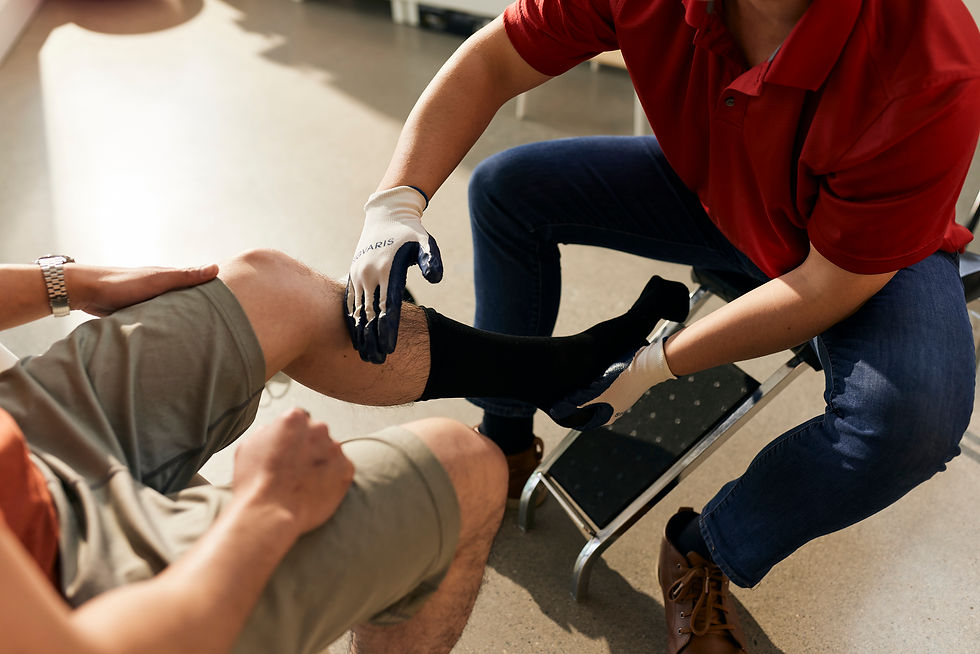
Rubber gloves should be worn when putting on the socks or stockings
Use gloves to smooth out wrinkles and position the garment
Try the “heel pocket out” method. Click here to watch a video.
For knee-highs, leave two finger widths between the knee joint crease and top of socks
Be patient; learning to put compression socks on can be frustrating. Try not to get discouraged because this can lead to inconsistent use, which contradicts the reason you need them in the first place. Trust that with a little practice, it will become easier.
For removing (doffing) compression stockings, it’s okay to start by pulling the top band down, then, while wearing the gloves, glide the sock downward with flat hands until it doubles over itself. Once it is near the ankle, grab the top band and pull it off. This is generally a lot easier than donning, but the compression in your socks can create resistance and make it difficult if you move too quickly.
If you continue to struggle donning or doffing, reach out for more helpful tips, including aids to make this process easier for you.
Importance of Proper Care of Compression Socks
Proper care of compression socks is vital to maintain their effectiveness and extend their lifespan. These specialized garments can lose their compressive properties if not cared for correctly, rendering them less effective at promoting circulation and providing support. Regular care ensures that the elastic fibers remain intact and the socks continue to exert the right amount of pressure.
One of the key reasons to care for your compression socks diligently is the investment you make in them. Quality compression socks can be expensive. Improper care can lead to frequent replacements, thereby increasing overall costs. By following proper care guidelines, you can ensure your socks last as long as possible.
Additionally, maintaining the cleanliness and hygiene of your compression socks is crucial for your skin health. Sweat, bacteria, and dead skin cells can accumulate on the socks, potentially leading to skin irritation or infections. Regular washing and proper drying can help keep your socks clean and your skin healthy. By understanding the importance of proper care, you can ensure that your compression socks continue to provide the support and benefits you need.
How To Wash Compression Socks
Hand washing is recommended, but you may machine wash on the gentle cycle with the garment turned inside out.
Use lukewarm water and a mild detergent. (We suggest Sigvaris Washing Solution.)
Do not use bleach or fabric softeners.
Rinse well
After washing, put stockings on a fluffy towel and roll gently to remove excess water
Loosely hang to dry
Do not place in the dryer or microwave
Signs Your Compression Socks Need Replacing
Even with proper care, compression socks will eventually need to be replaced. Recognizing the signs that your socks are no longer effective is crucial for maintaining the support and benefits they provide. One clear indicator is a noticeable loss of elasticity. If the socks feel loose or you feel like your symptoms have returned, it is time to consider a replacement.
The best to plan for replacing your compression socks every 6 months, depending on usage and material durability.
At Paris everyBODY, we ensure your legs get the care they deserve. Our skilled Movement Specialists are certified to measure you for a comfortable and personalized fit while helping you find a style you’ll love! Book your fitting today!


Comments